


This store requires javascript to be enabled for some features to work correctly.


$269.99 AUD
Regular price $219.99 AUDPerformance first
3L DWR shell with 20,000 mm waterproofing and 15,000 g/m²/24h breathability keeps you dry and comfortable in any condition.
Smart versatility
Relaxed fit with adjustable hood, cuffs, waist, and hem for adaptive coverage and free movement.
Functional details
Equipped with inner snow skirt, ventilation zips, and secure pockets for all-mountain practicality.
Built to last
Made with abrasion-resistant fabric, reinforced for durability season after season.
Recommended for
Backcountry rides, resort laps, and everyday alpine freedom.
Performance first
3L DWR shell with 20,000 mm waterproofing and 15,000 g/m²/24h breathability keeps you dry and comfortable in any condition.
Smart versatility
Relaxed fit with adjustable hood, cuffs, waist, and hem for adaptive coverage and free movement.
Functional details
Equipped with inner snow skirt, ventilation zips, and secure pockets for all-mountain practicality.
Built to last
Made with abrasion-resistant fabric, reinforced for durability season after season.
Recommended for
Backcountry rides, resort laps, and everyday alpine freedom.
| Material | 3L polyester fabric with DWR coating, polyester Lining |
| Waterproof Rating | 20,000mm |
| Breathability | 15,000 g/m²/24hr |
| Insulation | Cotton |
| Weight(Jacket) | Approx. 1000g |
| Weight(Pants) | Approx. 800g |
| Fit | Relaxed |
| Best For | Snowboarding, Skiing, Cold Weather Outdoor Activities |
| Durability | Abrasion Resistance > 300,000 cycles |
| Other Features | Snow Skirt, Underarm & Inner-thigh Ventilation, Adjustable Cuffs, Storage Pockets, Snow Pass Pocket |
| Material | 3L polyester fabric with DWR coating, polyester Lining |
| Waterproof Rating | 20,000mm |
| Breathability | 15,000 g/m²/24hr |
| Insulation | Cotton |
| Weight(Jacket) | Approx. 1000g |
| Weight(Pants) | Approx. 800g |
| Fit | Relaxed |
| Best For | Snowboarding, Skiing, Cold Weather Outdoor Activities |
| Durability | Abrasion Resistance > 300,000 cycles |
| Other Features | Snow Skirt, Underarm & Inner-thigh Ventilation, Adjustable Cuffs, Storage Pockets, Snow Pass Pocket |
$269.99 AUD
Regular price $219.99 AUDPerformance first
3L DWR shell with 20,000 mm waterproofing and 15,000 g/m²/24h breathability keeps you dry and comfortable in any condition.
Smart versatility
Relaxed fit with adjustable hood, cuffs, waist, and hem for adaptive coverage and free movement.
Functional details
Equipped with inner snow skirt, ventilation zips, and secure pockets for all-mountain practicality.
Built to last
Made with abrasion-resistant fabric, reinforced for durability season after season.
Recommended for
Backcountry rides, resort laps, and everyday alpine freedom.
Performance first
3L DWR shell with 20,000 mm waterproofing and 15,000 g/m²/24h breathability keeps you dry and comfortable in any condition.
Smart versatility
Relaxed fit with adjustable hood, cuffs, waist, and hem for adaptive coverage and free movement.
Functional details
Equipped with inner snow skirt, ventilation zips, and secure pockets for all-mountain practicality.
Built to last
Made with abrasion-resistant fabric, reinforced for durability season after season.
Recommended for
Backcountry rides, resort laps, and everyday alpine freedom.
| Material | 3L polyester fabric with DWR coating, polyester Lining |
| Waterproof Rating | 20,000mm |
| Breathability | 15,000 g/m²/24hr |
| Insulation | Cotton |
| Weight(Jacket) | Approx. 1000g |
| Weight(Pants) | Approx. 800g |
| Fit | Relaxed |
| Best For | Snowboarding, Skiing, Cold Weather Outdoor Activities |
| Durability | Abrasion Resistance > 300,000 cycles |
| Other Features | Snow Skirt, Underarm & Inner-thigh Ventilation, Adjustable Cuffs, Storage Pockets, Snow Pass Pocket |
| Material | 3L polyester fabric with DWR coating, polyester Lining |
| Waterproof Rating | 20,000mm |
| Breathability | 15,000 g/m²/24hr |
| Insulation | Cotton |
| Weight(Jacket) | Approx. 1000g |
| Weight(Pants) | Approx. 800g |
| Fit | Relaxed |
| Best For | Snowboarding, Skiing, Cold Weather Outdoor Activities |
| Durability | Abrasion Resistance > 300,000 cycles |
| Other Features | Snow Skirt, Underarm & Inner-thigh Ventilation, Adjustable Cuffs, Storage Pockets, Snow Pass Pocket |
20K waterproof - dry protection for every run
Makes the jacket splash-proof, keeping you dry on the slopes

Seam-sealed with weatherproof tape to lock out water


Multiple zippered pockets for secure storage of small essentials on the go.


Zip open to cool down. Snap skirt to seal out snow. Total climate control on the slopes


Dedicated sleeve pass pocket keeps your lift ticket ready for fast scanning.
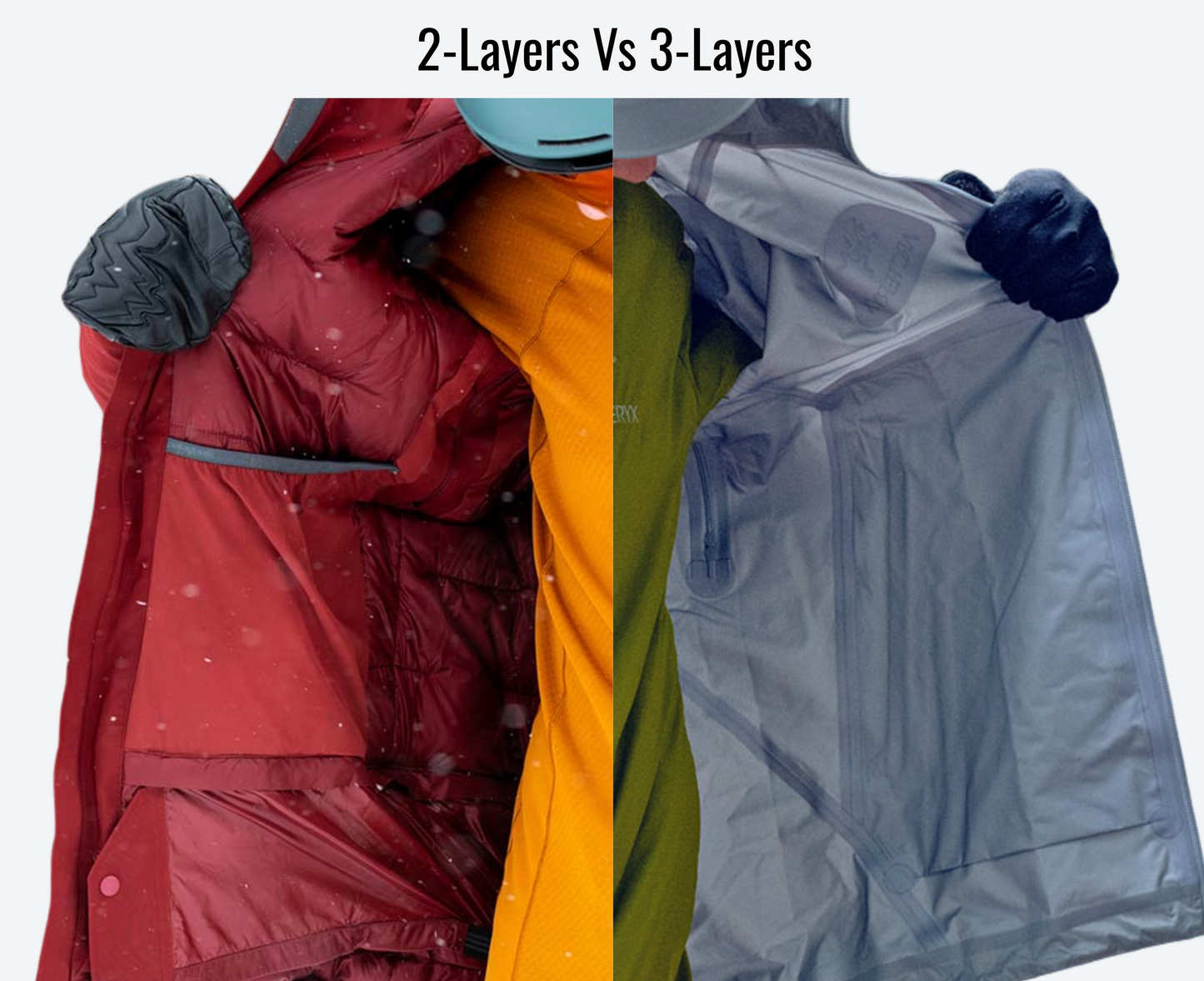
Discover the difference between 2-layer and 3-layer designs with ChillCarve. Choose the perfect balance of durability and comfort for your needs.
2L and 3L refer to the number of structural layers in the outermost part of a snow jacket. The main difference lies in whether there is a third inner layer tightly bonded to the second breathable membrane. This affects breathability, durability, weight, and comfort.
| Comparison Criteria | 2L Fabric | 3L Fabric |
|---|---|---|
| Definition of Layers | 2L and 3L refer to the layers of the outermost fabric, not the entire garment. They define fabric construction, affecting waterproofness, breathability, durability, and comfort. | |
| Layer 1: Out Layer | ✔️ | ✔️ |
| Layer 2: Membrane | ✔️ | ✔️ |
| Layer 3: Lining | ✖️ | ✔️ |
| Waterproof | ★★★★☆ | ★★★★★ |
| Breathability | ★★★☆☆ | ★★★★★ |
| Durability | ★★★☆☆ | ★★★★★ |
| Weight | ★★★☆☆ | ★★★★★ |
| Comfort | ★★★★★ | ★★★★☆ |
| Price | ★★★★★(Best Budget Choice) | ★★★☆☆(Expensive but Worth It) |
| Best Use Cases | Casual & resort skiing, general outdoor activities | Backcountry, mountaineering, extreme conditions |
We highly recommend that you choose the right snow clothing for your needs and don't just stick to the parameters!
Water resistance is measured in millimetres (e.g., 8,000mm, 20,000mm) – higher numbers don’t always mean better performance.
Water resistance is measured in millimetres (e.g., 8,000mm, 20,000mm) – higher numbers don’t always mean better performance.
Balancing waterproofing and airflow prevents sweat buildup:
Balancing waterproofing and airflow prevents sweat buildup:
Ski jackets themselves don’t provide warmth—insulation comes from mid-layers!
Ski jackets themselves don’t provide warmth—insulation comes from mid-layers!


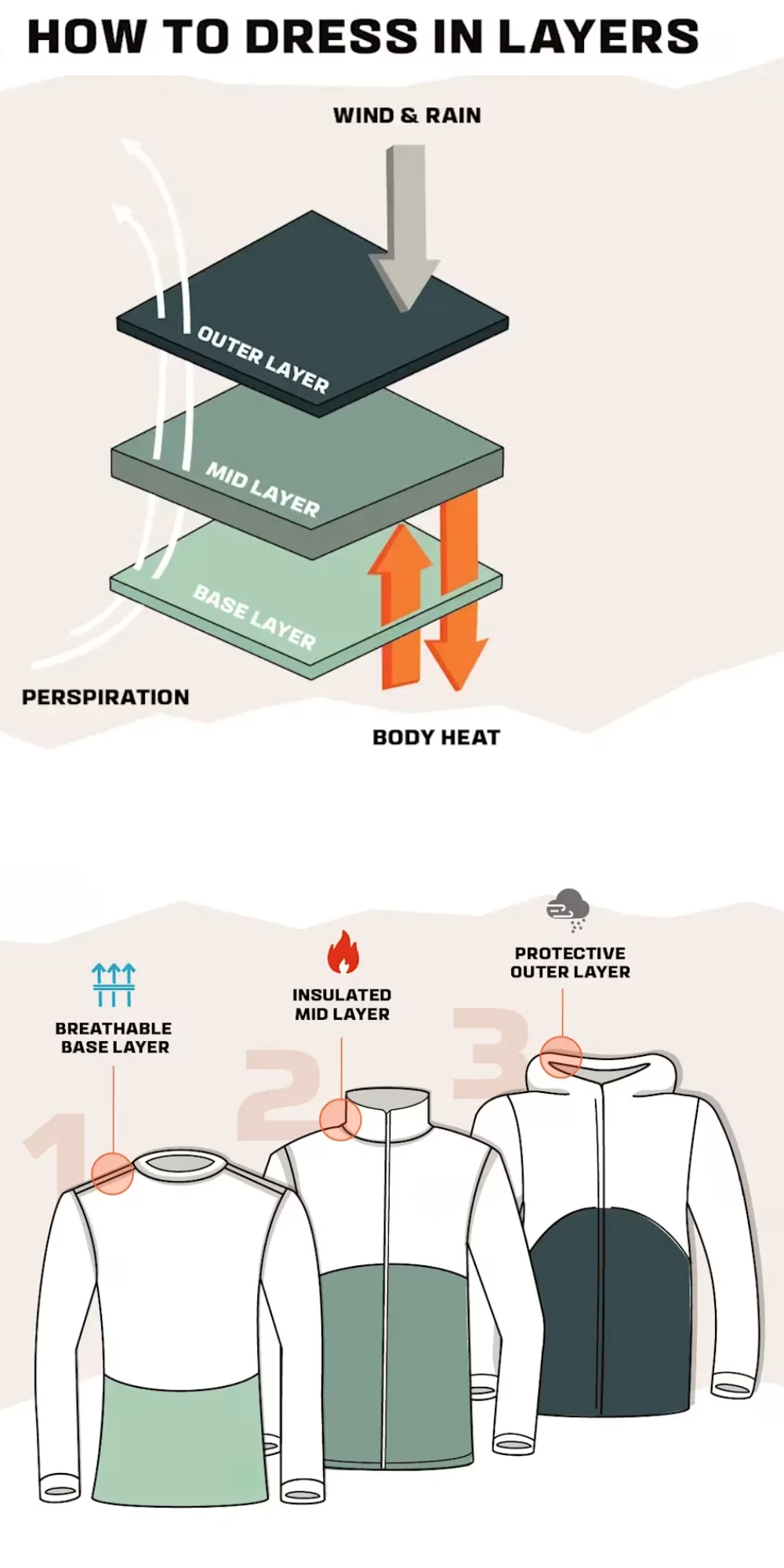
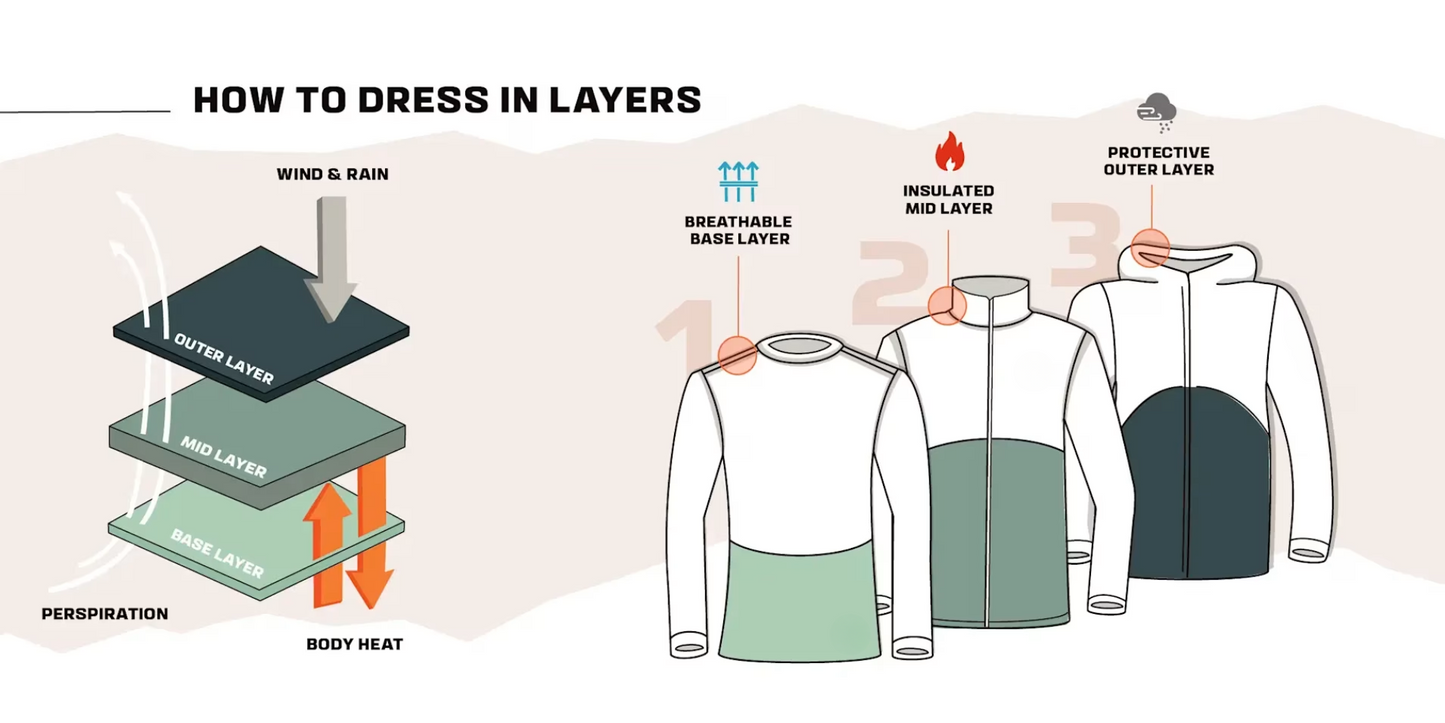
The concept of the three-layer system originated from outdoor activities, designed to help people stay warm and dry in extreme weather conditions. Through a scientific layering approach, the base layer wicks moisture, the mid layer provides insulation, and the outer layer offers wind and water resistance while maintaining breathability. Although initially developed for mountaineering and exploration, this method is now widely used in sports like skiing, ensuring comfort and performance in various environments.